Solutions by organization and team
Databasin helps mid-market organizations improve analytics, automate recurring work and build the data infrastructure they need. We begin with the business questions your teams want to answer. Our team then implements the solution on Databasin and helps people use it in their daily work.




Results from customer work

- 20+ systems unifiedDatabasin brought WashU Medicine's financial data together.
- Infrastructure costs at 1/3 of the traditional approachWashU Medicine's result from changing its data infrastructure.
18%
Higher grant proposal success
Measured at a research institution working with Databasin.
“What used to take weeks or sometimes even months now happens in minutes.”
Help for your organization
Health systems
Examine clinical, financial and operational questions with connected data and workflows your teams can use.
Higher education
Give finance, HR, student-support and research offices analysis they can explore and use together.
Finance and HR
Investigate workforce and financial changes using Workday history, other business records and shared analysis.
Growing companies
Understand operating performance and automate recurring preparation with a team to implement and support the work.
Private equity
Examine portfolio companies' performance and identify where data and automated workflows could improve efficiency.
Retail and grocery
Explore inventory, product turnover, traffic and loyalty to understand what changes across the business.
Nonprofits
Reduce recurring reporting work and help teams understand and explain the impact of their programs.
Support for an existing data stack
A simpler data stack
Reduce overlapping tools and recurring maintenance while giving your business more useful analysis and workflows.
The platform behind the work
People can ask questions, build Data Apps and automate recurring work using the data connected through Databasin.
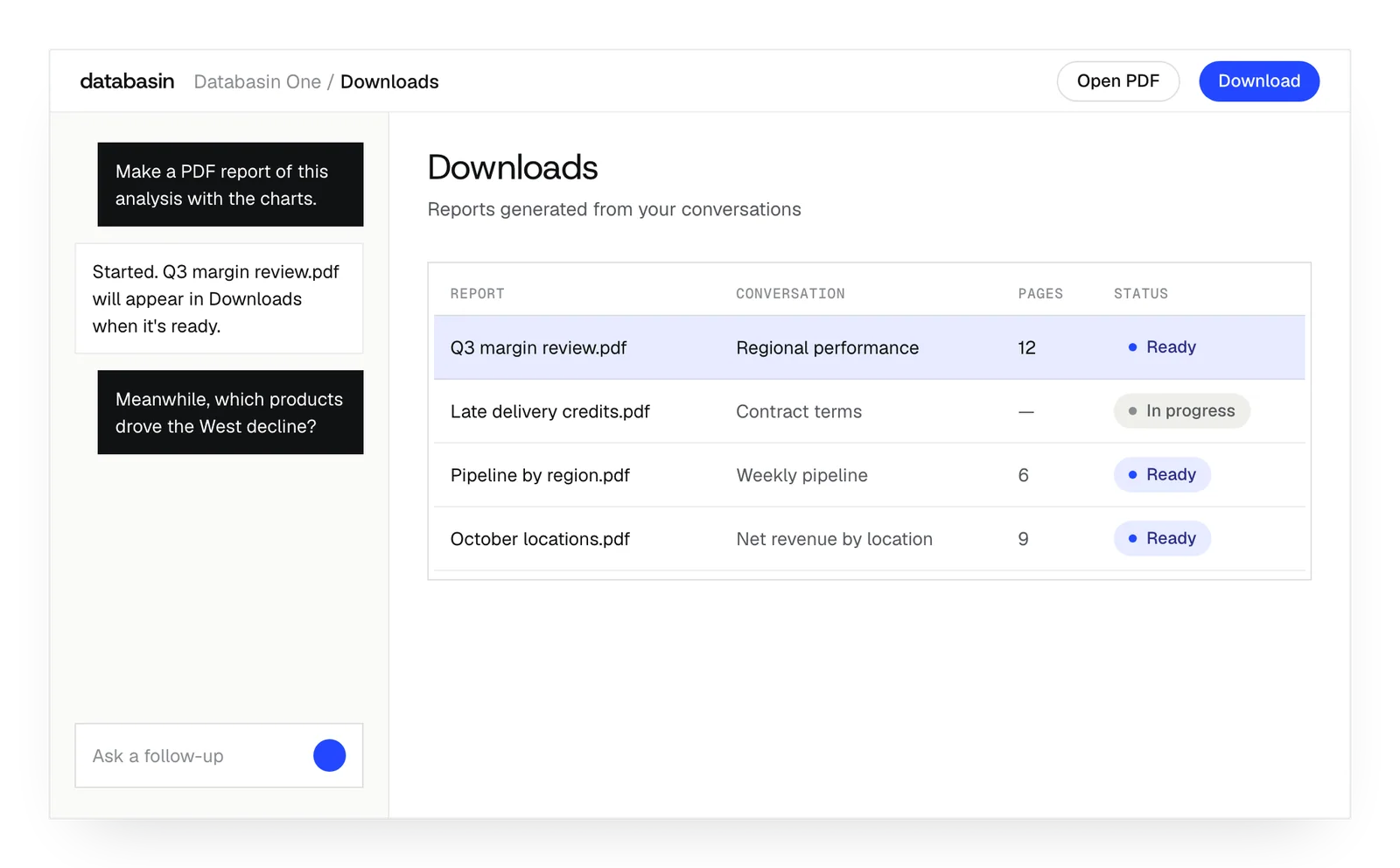
Ask a business question in plain language and examine the query behind its answer.
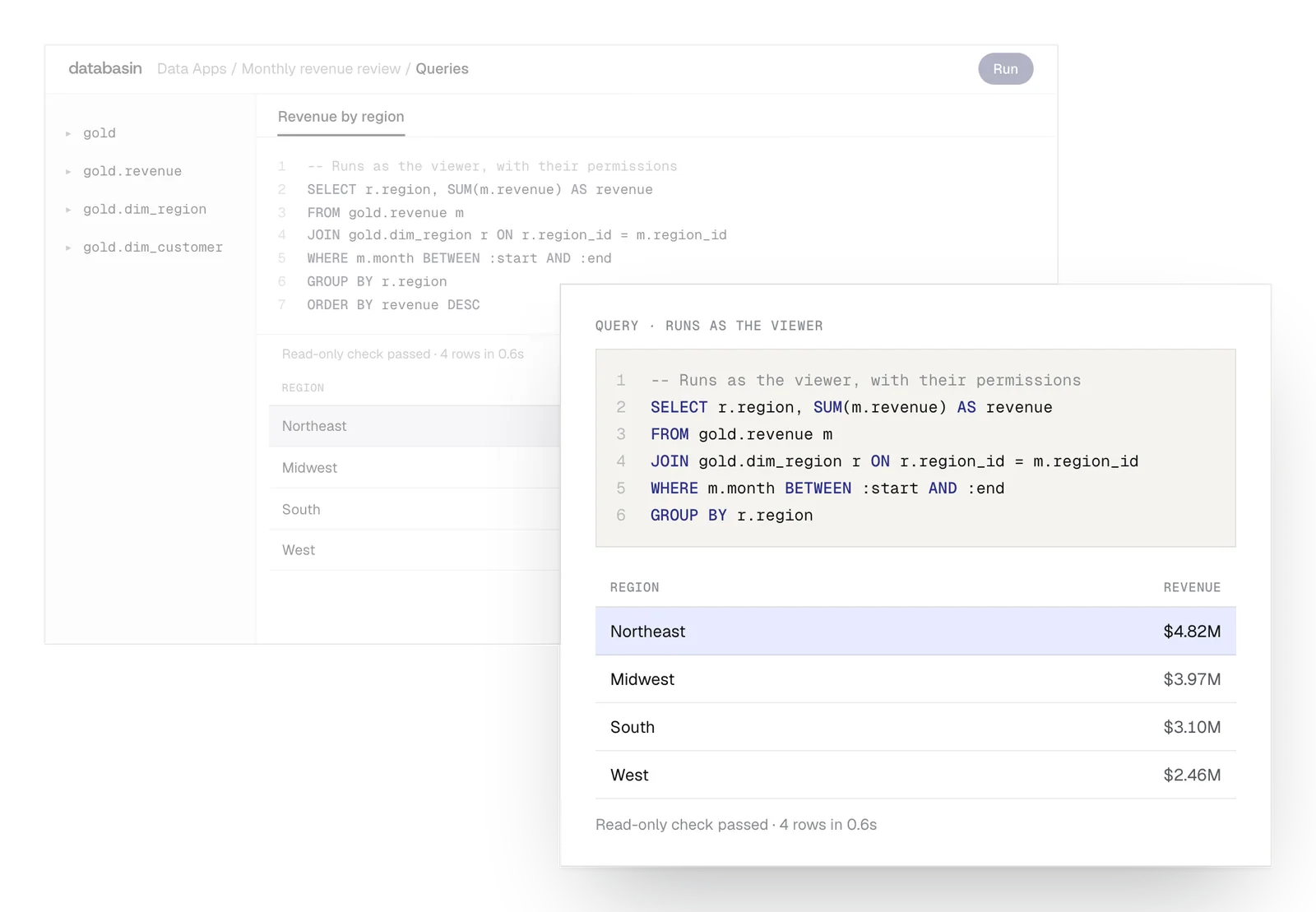
Describe an app for your team, then share it so colleagues can explore the measures.
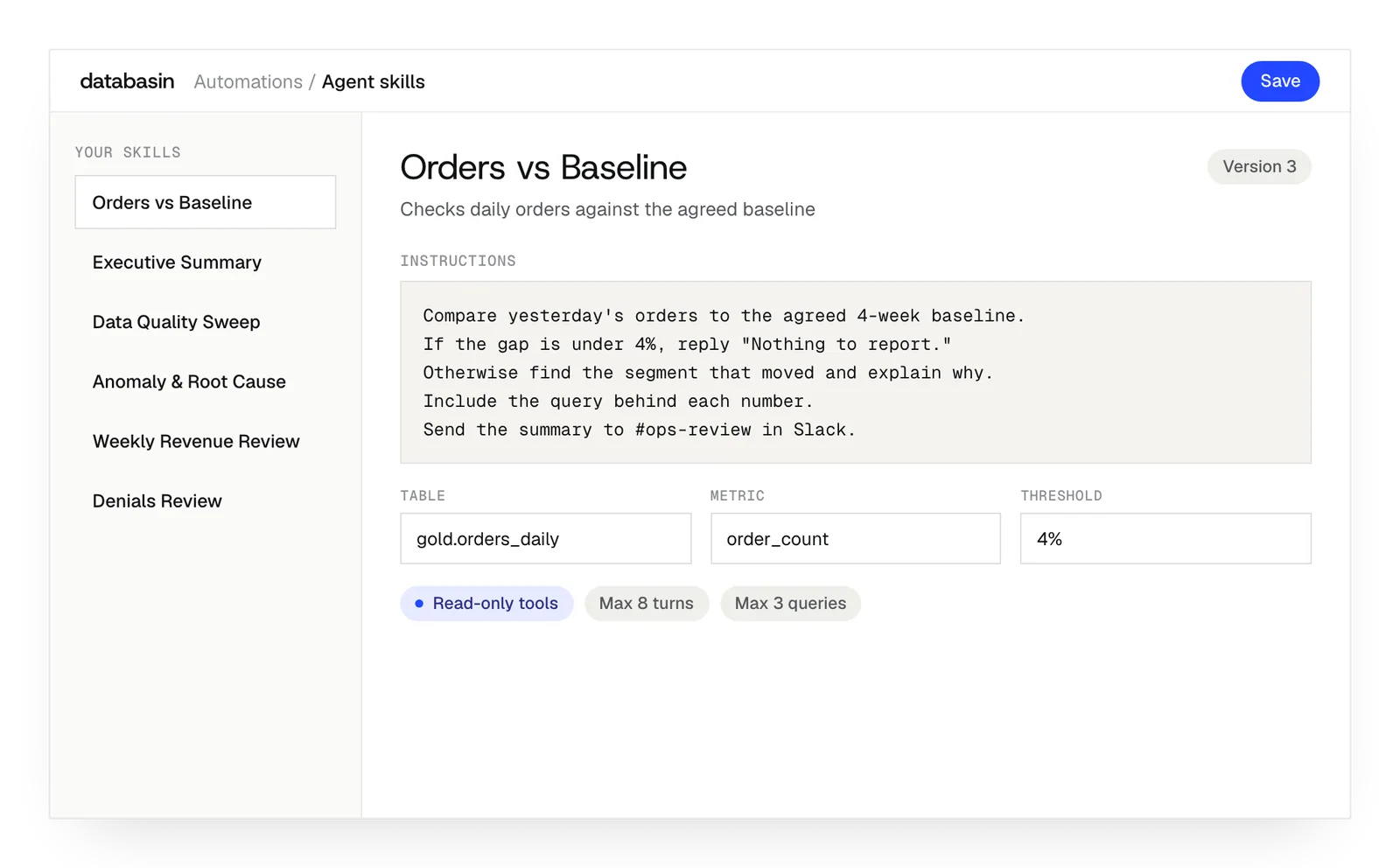
Write down a repeated investigation and have an agent return its findings with evidence.
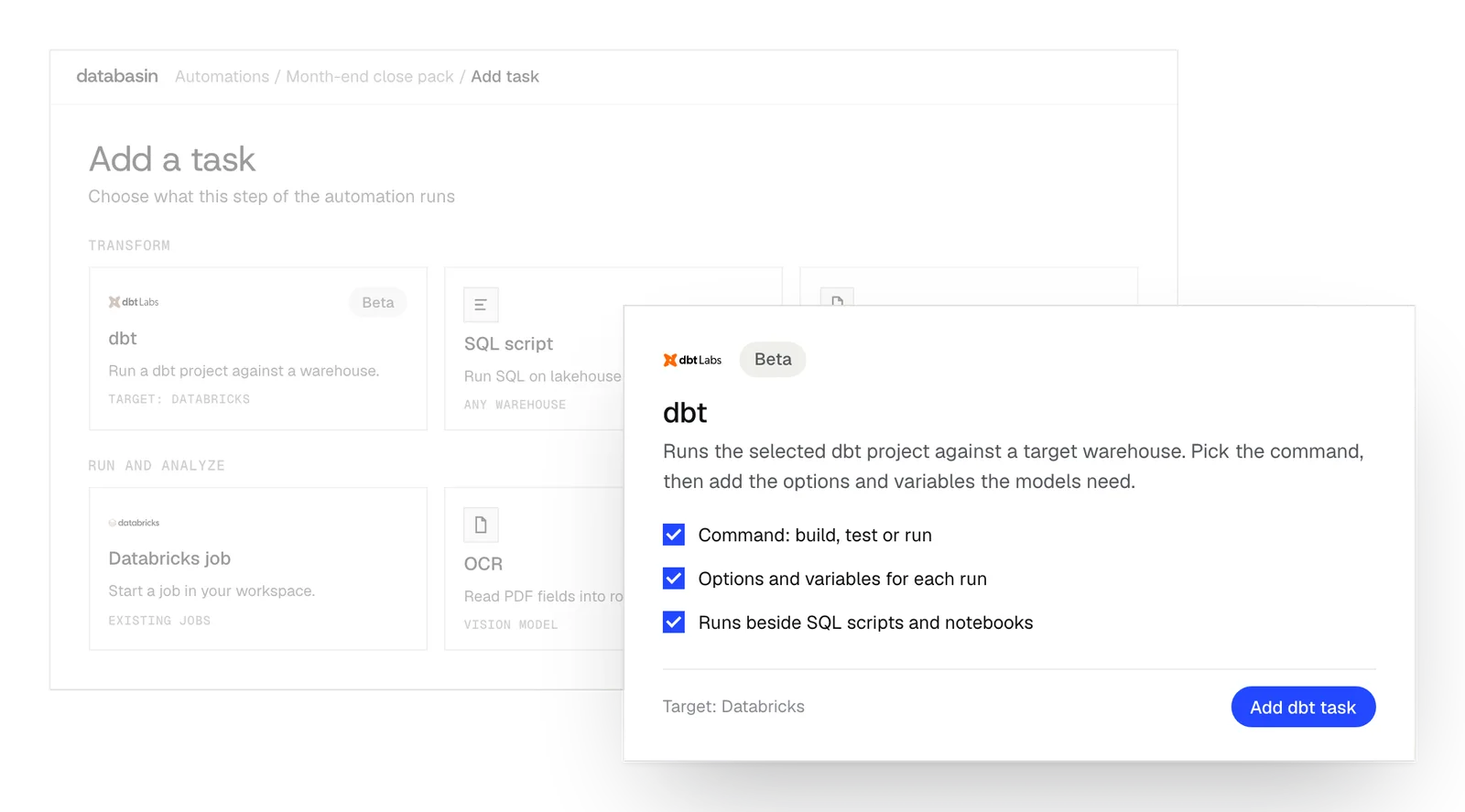
Schedule the preparation and delivery of a review, with investigation tasks where the work needs them.
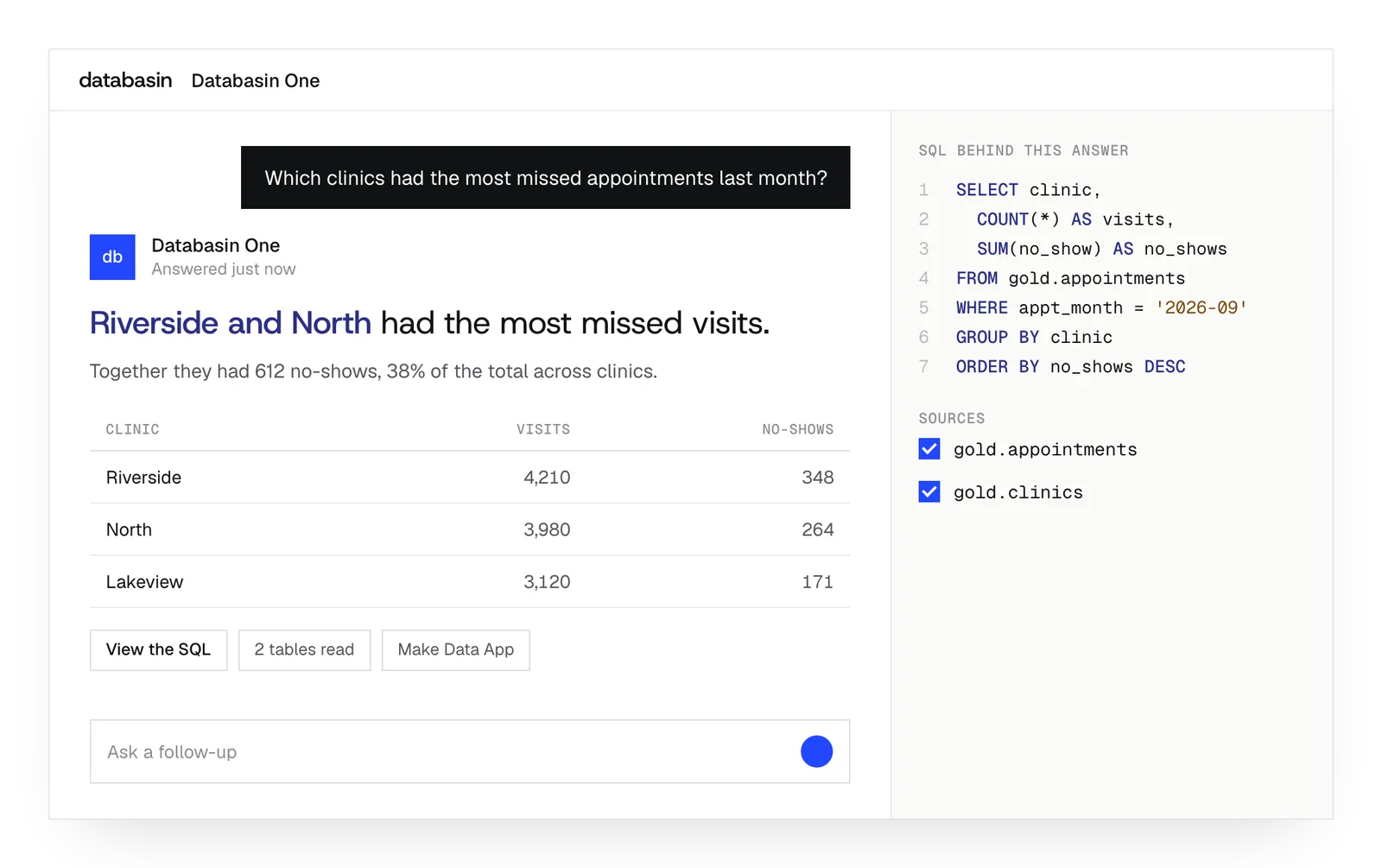
Use prepared data and agreed definitions from the systems involved in the work.
Design, Build, Run
We take responsibility for the work from defining the outcome through implementation and ongoing support.
Design
We define the outcome, current processes and expected return with your stakeholders. A working example shows how Databasin would answer your business questions.
Build
We get your first use case live in 90 days. Communication, rollout, training and success measurement are included in the work.
Run
Choose the help you need after launch. We can run the solution for you, provide monthly support hours or stay on call.
What happens next
We would like to hear where your team wants to make progress with data and AI. We can discuss a project you have in mind or explore where Databasin could help with the work.
What happens next
Book a demo
Book a conversation about your organization and the work you want to improve. Questions about where to start are welcome.
Explore the opportunity
We show a working example that answers your business questions, then discuss what it would take to deliver it for your team.
Get the first result
After agreeing the first use case, we implement it with your team. We train the people using it and measure how it performs.
FAQ
Which page should we read if several categories apply?
Start with the work you want to improve. A university finance team may find the finance and HR page most useful, while its research office starts with higher education. These routes describe different needs within the same offer. The conversation can cover work that crosses departments or categories.
Are these separate products for each industry?
No. The work uses Databasin's platform, with analysis, workflows and implementation shaped around the organization. Our team brings industry knowledge, metric definitions, process maps and governance patterns to the engagement. We apply them to the sources and decisions involved, with the people who understand the local work.
Can the engagement cover both analysis and workflow automation?
Yes. Analysis and automation can be parts of the same use case. We might automate the preparation for a recurring review, then give people analysis they can explore. We design the sequence around the decision, including when someone needs to examine a finding before the work proceeds.
What role does our IT team play?
Your IT team helps us understand source access, security requirements and the environment that will support the work. Business owners explain the intended use. We work with both groups during implementation and agree the operating responsibilities, so people know how the result will be supported after launch.
How do you handle measures that differ between teams?
We establish each measure's meaning with the team using it. Different periods or scopes can be appropriate for different decisions. We preserve those distinctions when preparing the data and make the calculations available for review. People can then understand why figures differ when they compare them.
How do you decide whether the project succeeded?
During design, we establish how the business owner will judge the improvement. We include those success measures in the build, so the team can examine the result once people use it. What they learn from that review helps determine whether further changes are needed.
How will staff learn to use what you build?
Staff learn through training planned around their work. We cover how to understand the information, examine a result and use it in the process. Training is part of rollout, with support afterward so people have help as they apply what they have learned to their tasks.
Where should a project that crosses departments start?
The business question and its owner give us a place to begin. We identify the information and people needed to answer it, across departments where necessary. We then define a first use case that covers that work and gives its owner a result they can use.