Our AI consulting services help your team investigate business questions and automate recurring data work using your organization's own information. We define a useful application with you, prepare its data and build it on Databasin. Rollout, training and ongoing support help people put the result into daily use.




Results from customer work

- 20+ systems unifiedDatabasin brought WashU Medicine's financial data together.
- Infrastructure costs at 1/3 of the traditional approachWashU Medicine's result from changing its data infrastructure.
18%
Higher grant proposal success
Measured at a research institution working with Databasin.
“What used to take weeks or sometimes even months now happens in minutes.”
AI on company data
A useful AI answer needs the records and definitions behind the business question. We prepare those inputs from your organization's data. For a staffing question, that means identifying the people, period and definition of headcount the answer should use.
The same headcount definition can serve a question, a shared Data App and a scheduled investigation. Each use keeps the business meaning consistent. People can inspect its supporting records and queries when they need to understand the result.
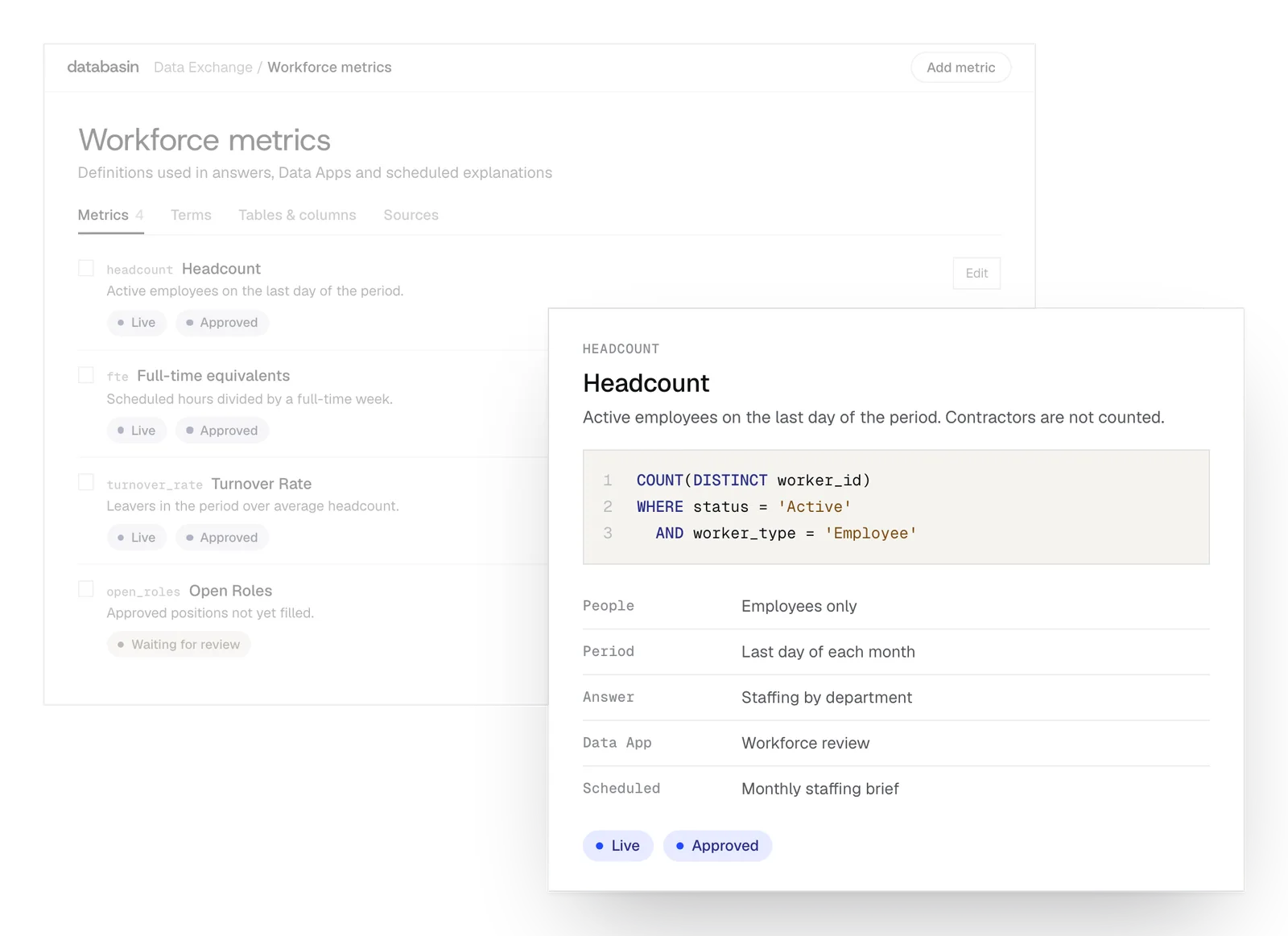
The platform behind the work
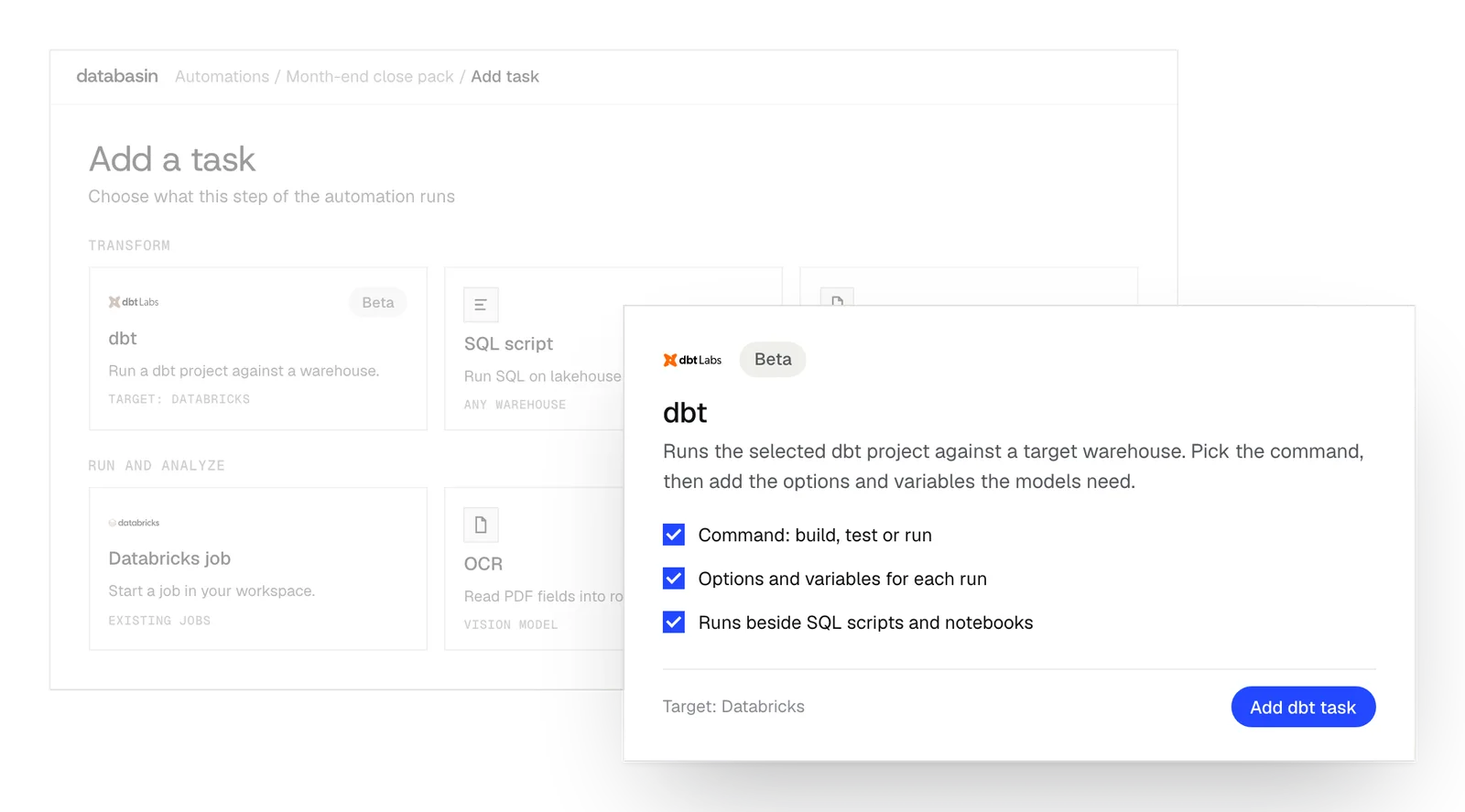
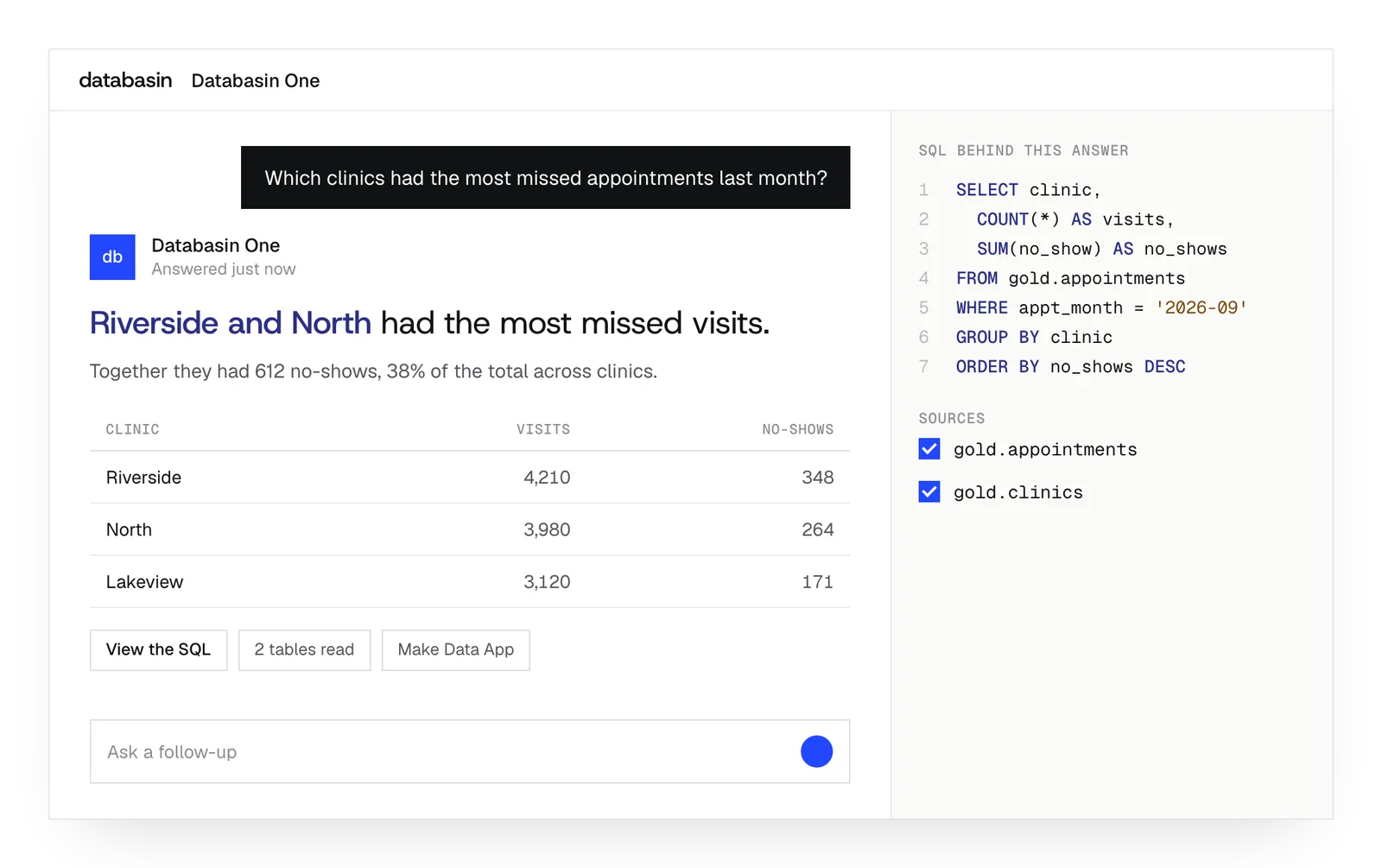
People can ask questions, build Data Apps and automate recurring work using the data connected through Databasin.
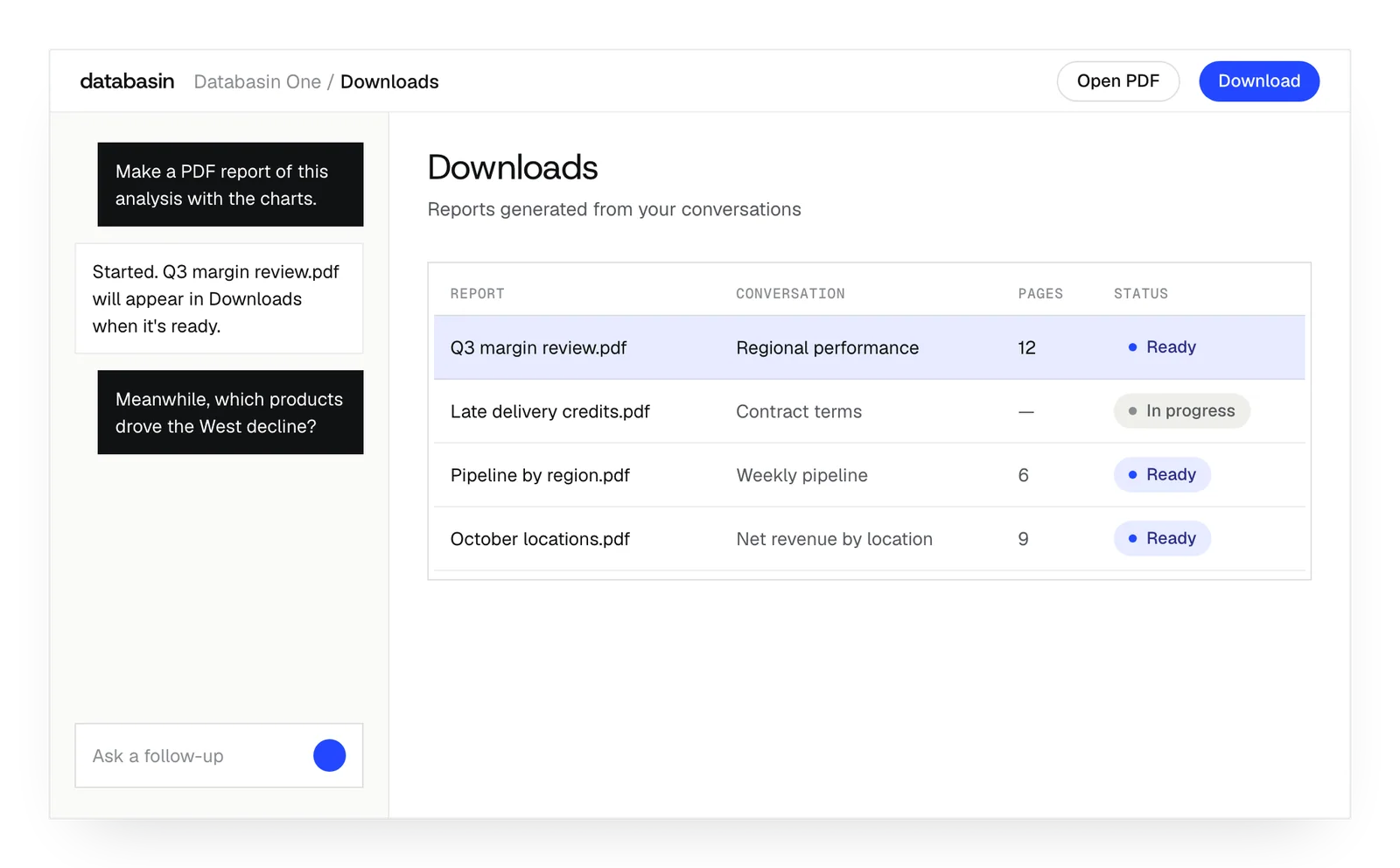
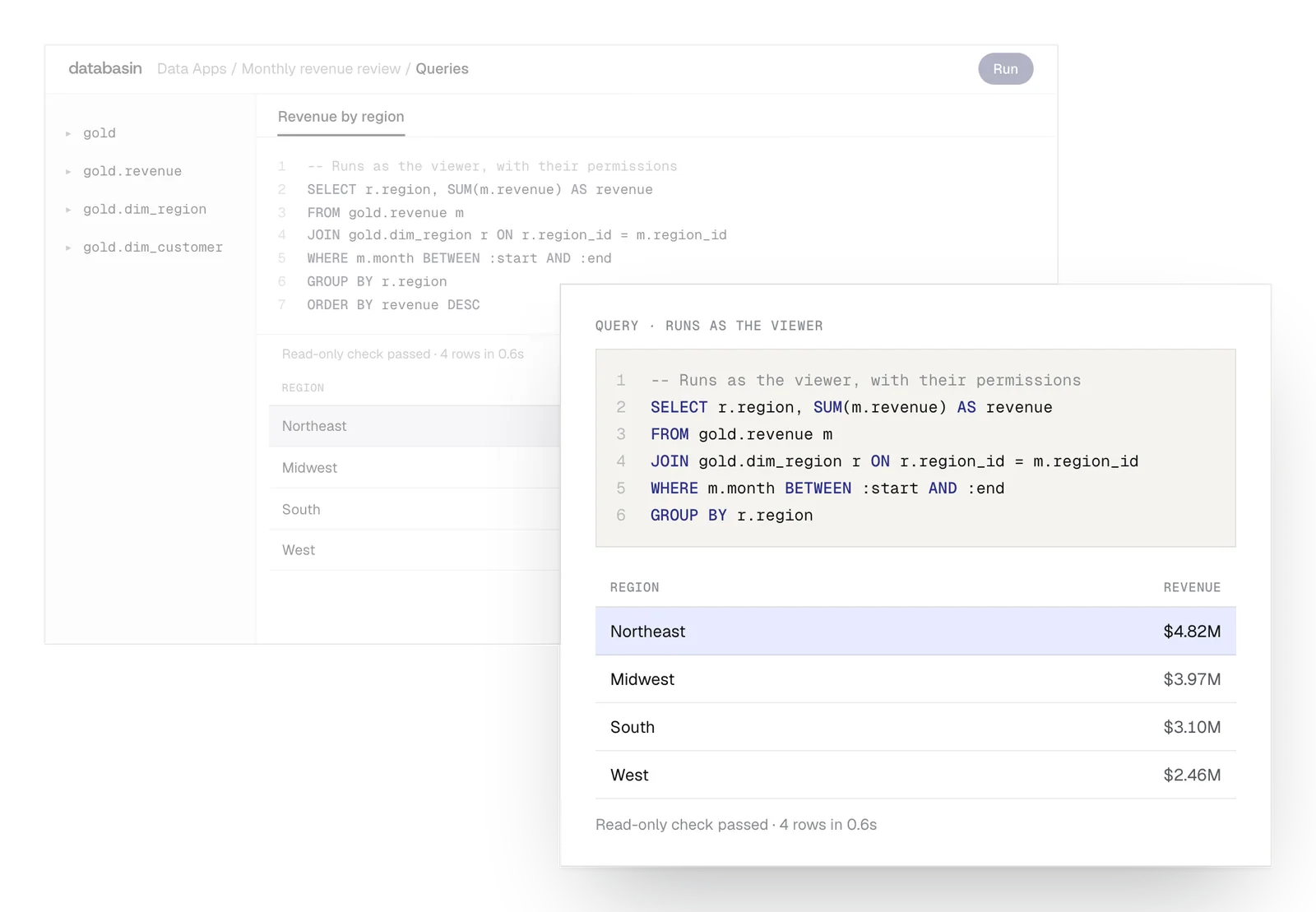
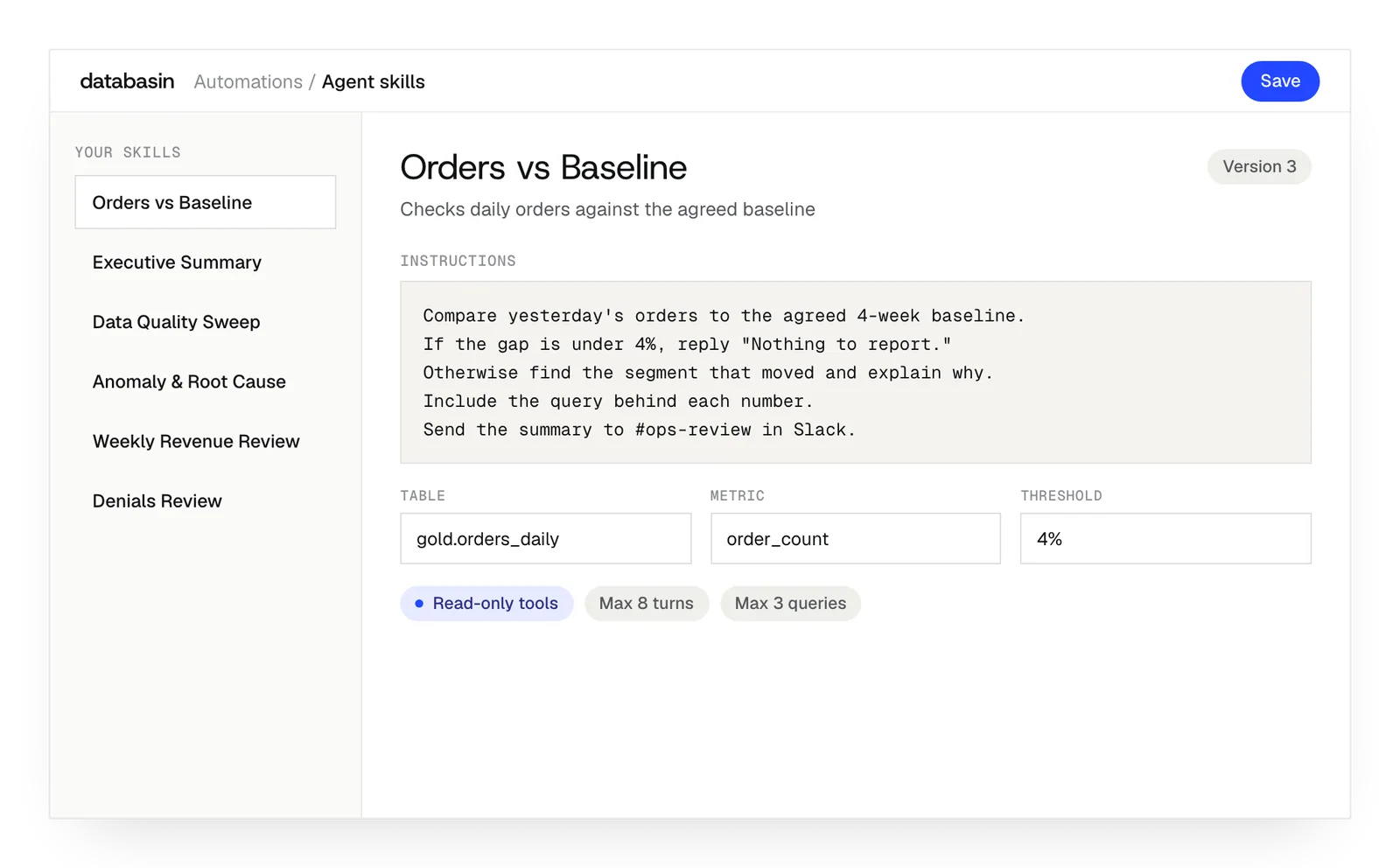
Design, Build, Run
We take responsibility for the work from defining the outcome through implementation and ongoing support.
Design
We define the outcome, current processes and expected return with your stakeholders. A working example shows how Databasin would answer your business questions.
Build
We get your first use case live in 90 days. Communication, rollout, training and success measurement are included in the work.
Run
Choose the help you need after launch. We can run the solution for you, provide monthly support hours or stay on call.
What we prepare and implement
A useful task
We identify the question and comparison with the person responsible for the business outcome. The task then has a defined purpose and a result users can assess.
Data and definitions
We establish access and prepare the source records and business measures. These inputs give the application the information and meaning needed to answer the question.
Evidence for review
We review the SQL and source evidence with people who understand the records. Agent run records also show the queries used and output returned.
Use in practice
We introduce the application and train its users to investigate questions and review evidence. We use their experience of the work to improve it.
Explaining changes in weekly orders
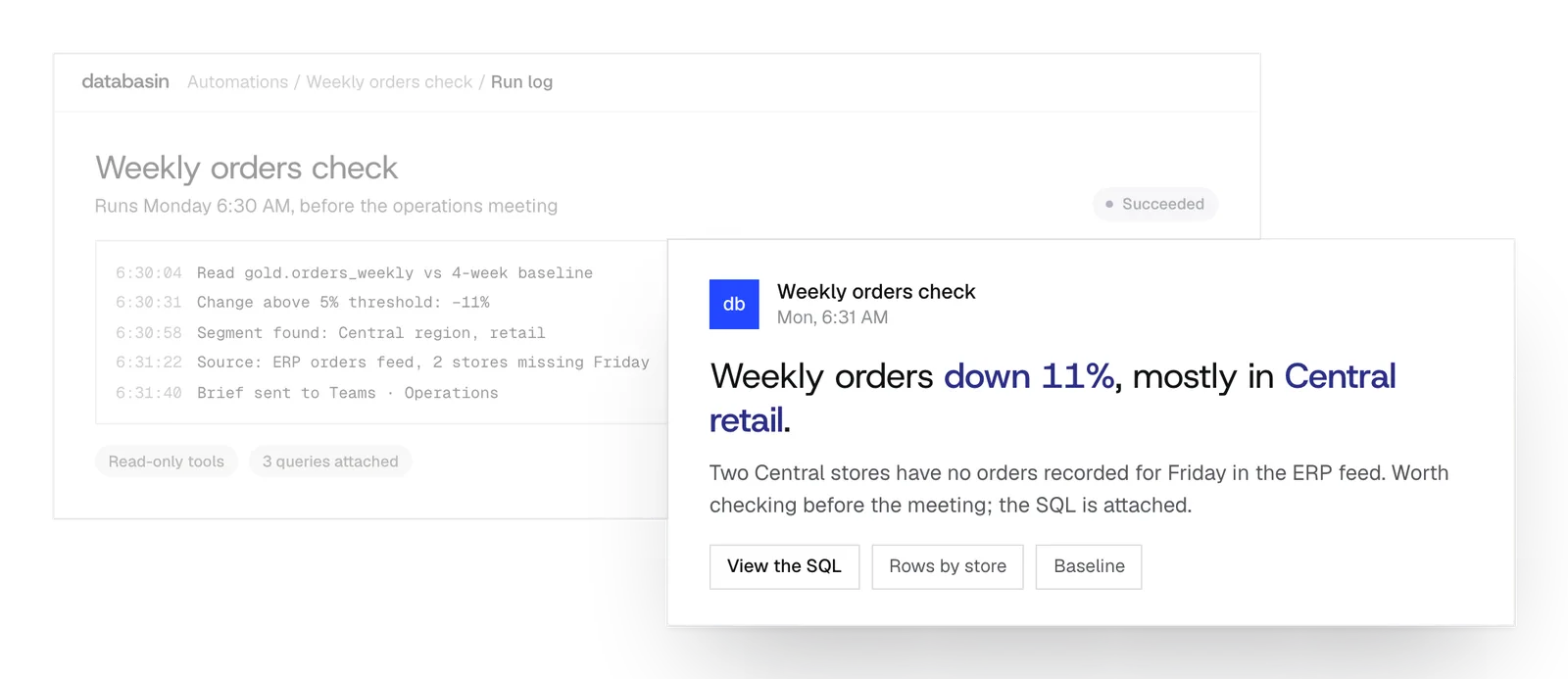
An orders investigation can prepare an explanation before the weekly operations meeting. We configure it around the team's baseline and definition of a change worth reviewing. The agent identifies the segment and source behind that change and includes its SQL.
The operations lead uses the explanation and evidence to investigate what happened and decide how to respond.
What happens next
We would like to hear where your team wants to make progress with data and AI. We can discuss a project you have in mind or explore where Databasin could help with the work.
What happens next
Book a demo
Book a conversation about your organization and the work you want to improve. Questions about where to start are welcome.
Explore the opportunity
We show a working example that answers your business questions, then discuss what it would take to deliver it for your team.
Get the first result
After agreeing the first use case, we implement it with your team. We train the people using it and measure how it performs.
FAQ
Do we need to finish cleaning all our data before starting?
No. Readiness is assessed for the first task. We identify the sources, definitions and permissions its question requires, then include any missing preparation in the plan. This gives the data work a specific purpose: supplying the information that application will use.
What if our existing platform already offers AI features?
We review how those features serve your users today. Databasin can sit alongside Databricks, Snowflake or Fabric and complete missing work, such as source connections or business measures. We also help introduce the resulting workflow to the people who will use it.
Can we use a model connection our organization controls?
Yes, including in Private Azure. We review the chosen model provider and request path during design. Your organization can assess where those requests go and how the connection meets its requirements before the application uses the data.
Can an AI agent update records in a source system?
No. Production-source tools are read-only and cannot write, alter or delete records. Each run also has turn limits, query budgets and row caps. A workflow that needs an external action must use a separately authorized task with its own explicit permissions.
How can someone investigate an answer that looks wrong?
The answer includes SQL and source information for inspection. A reviewer who understands the records can use them to check the calculation. An agent also records its queries and output, helping the team trace which input, definition or query needs correction.
Are scheduled agent tasks available for a first project?
Yes. The scheduled LLM Agent task is in beta and runs a saved skill. We establish whether it suits the workflow and support needs during design. Its requirements and status are described in the task-type documentation.
Does this service cover every kind of AI application?
We focus on business questions, shared analysis and recurring investigations using connected data. The initial conversation establishes what your users need and which capabilities fit. A request beyond that work needs its own scope, which we discuss before selecting an application.
Can we extend the first application to another department?
Yes. We check the new questions and access requirements against the records, definitions and skills already prepared. Suitable parts can be reused. We add the sources, measures and user training needed for the next department's process.