A data analytics platform for business teams
Databasin is a data analytics platform for mid-market teams that want to answer business questions and automate recurring work. Ask about a change, explore it in a Data App or schedule an investigation. We connect the source records and build the solution around the decisions your people need to make.
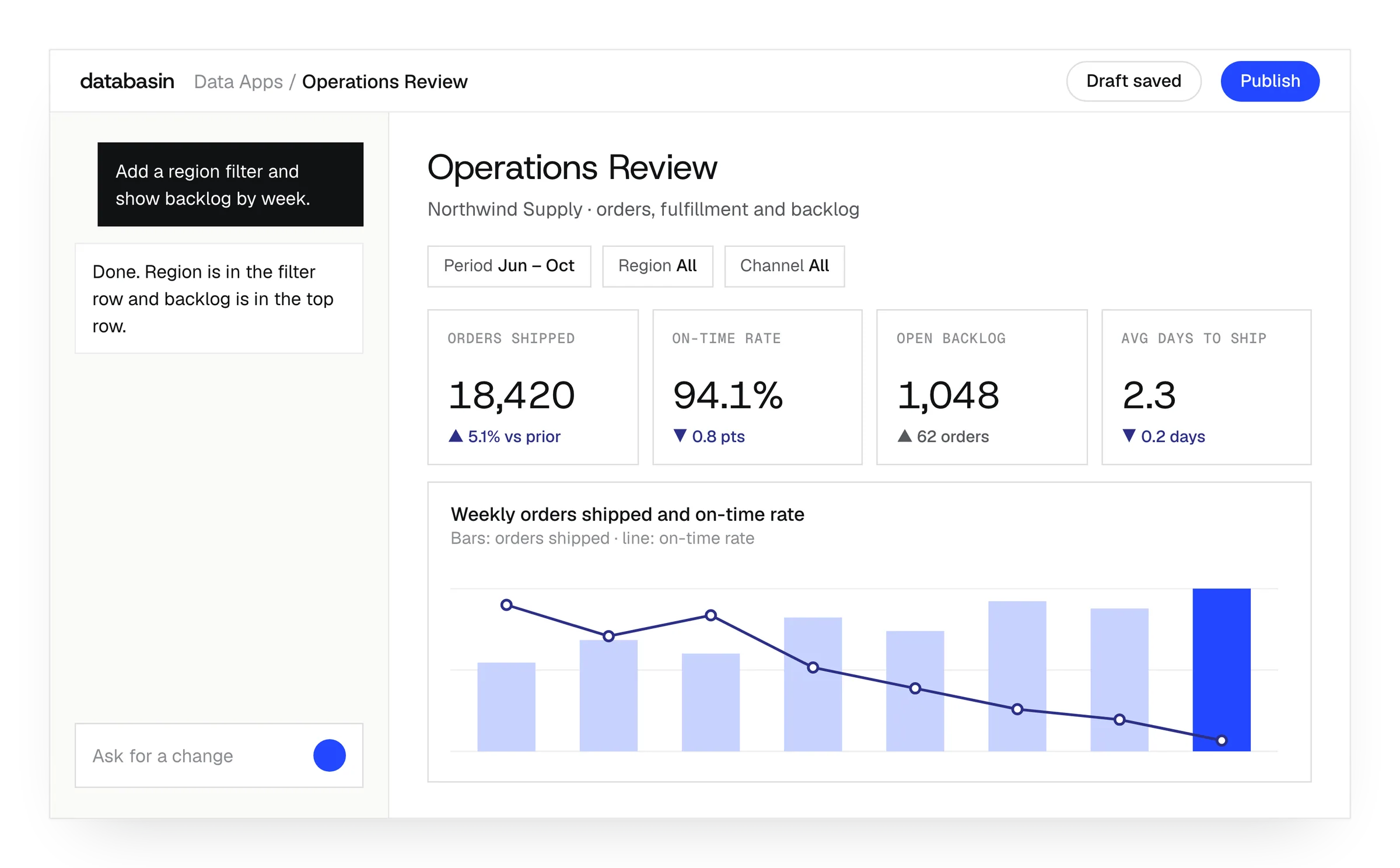




Capabilities for everyday business decisions
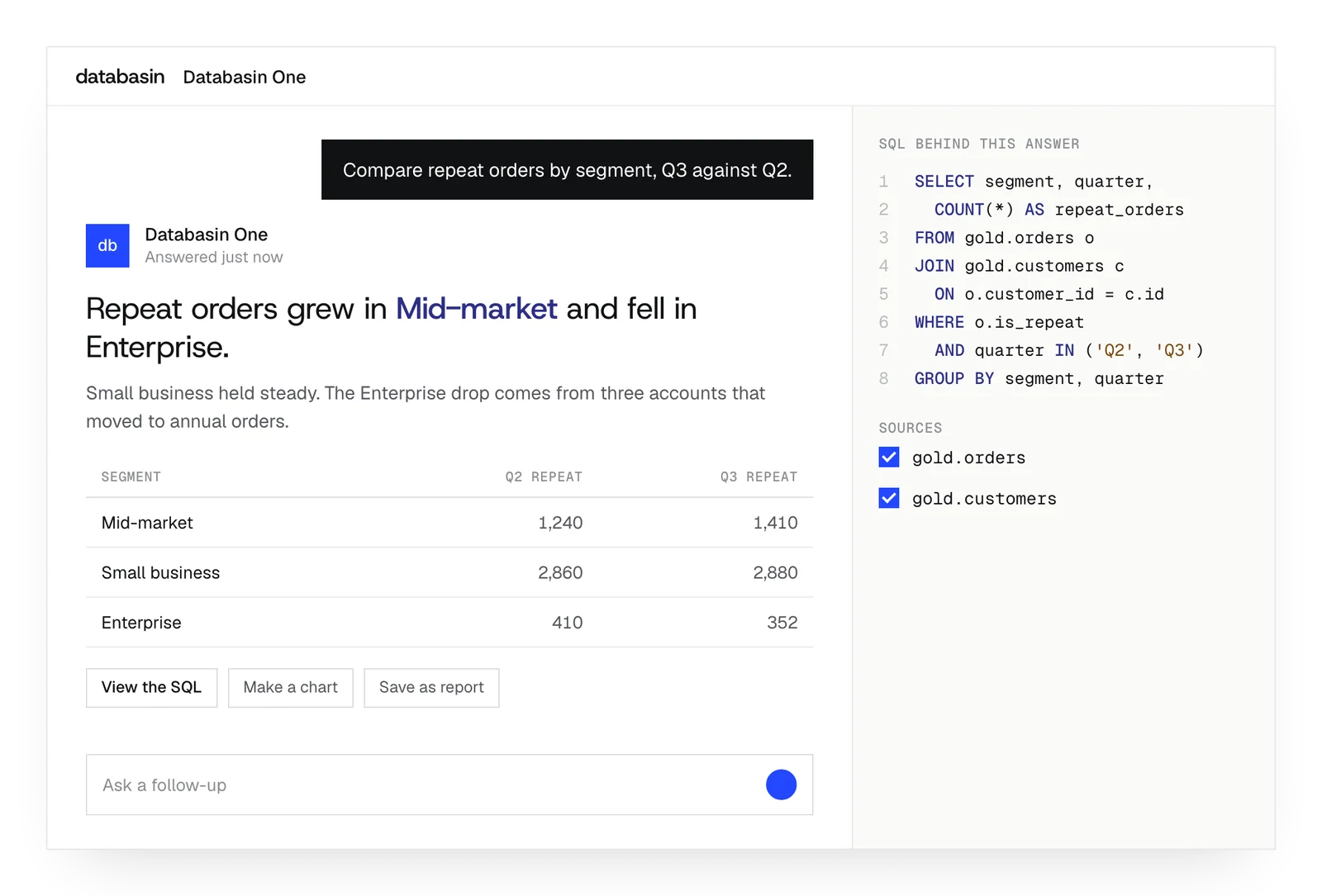
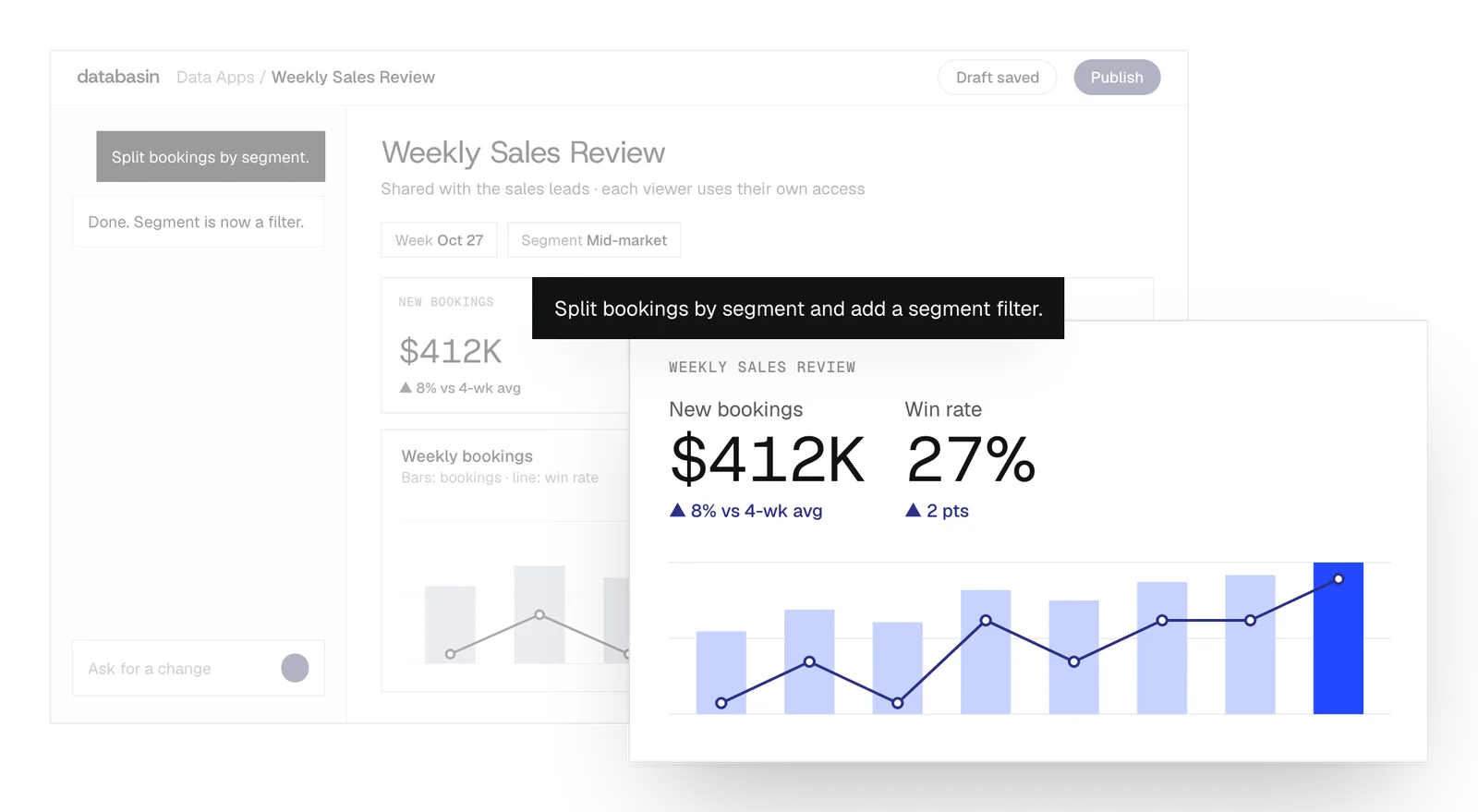
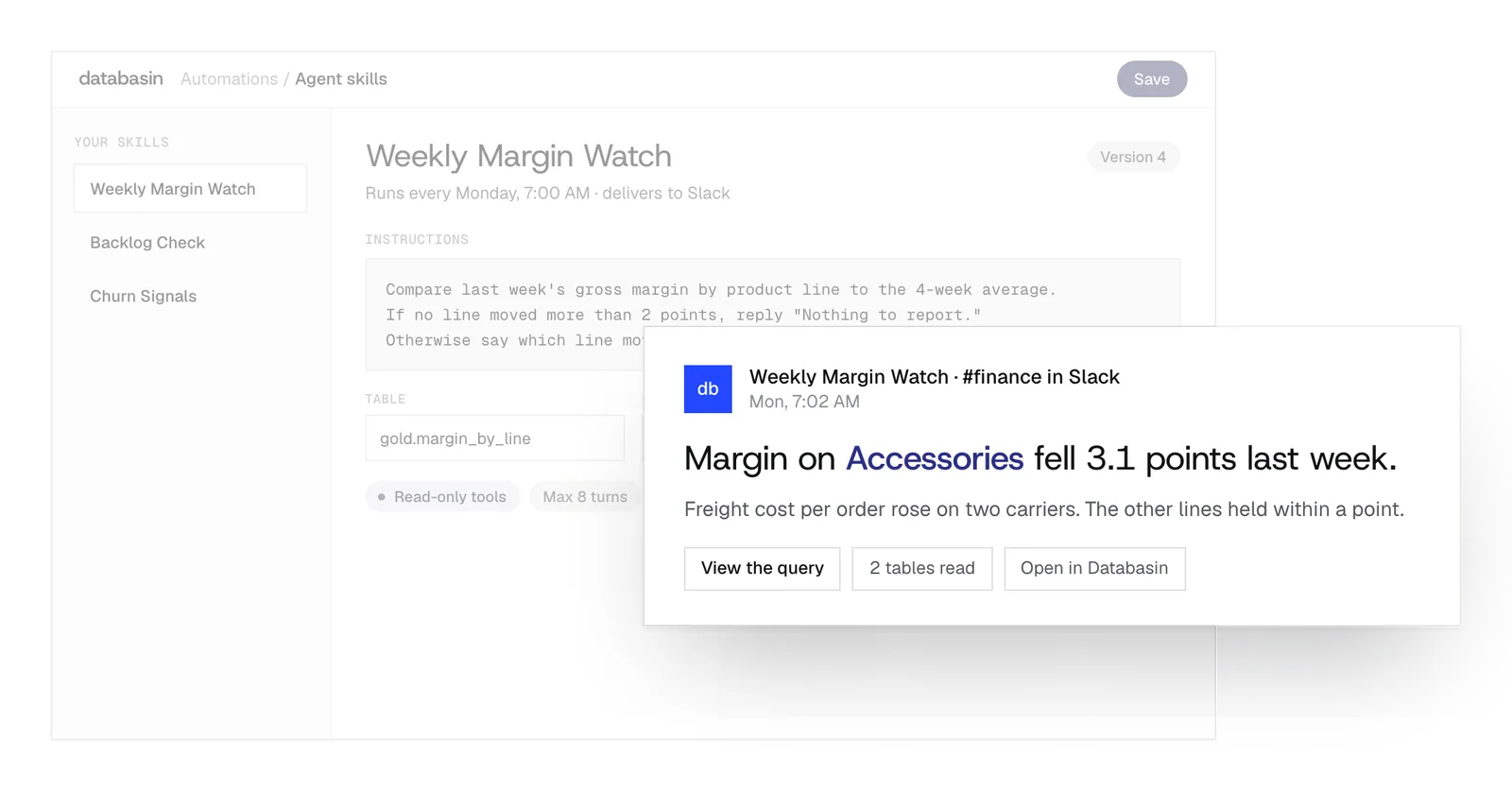
Design, Build, Run
We take responsibility for the work from defining the outcome through implementation and ongoing support.
Design
We define the outcome, current processes and expected return with your stakeholders. A working example shows how Databasin would answer your business questions.
Build
We get your first use case live in 90 days. Communication, rollout, training and success measurement are included in the work.
Run
Choose the help you need after launch. We can run the solution for you, provide monthly support hours or stay on call.
Results from customer work

- 20+ systems unifiedDatabasin brought WashU Medicine's financial data together.
- Infrastructure costs at 1/3 of the traditional approachWashU Medicine's result from changing its data infrastructure.
18%
Higher grant proposal success
Measured at a research institution working with Databasin.
“What used to take weeks or sometimes even months now happens in minutes.”
Security for business data
Databasin gives your team controls for who can use business data and records of how they use it.
Access
Your organization manages the identities people use to sign in. Data permissions apply to their work, and investigation agents have read-only access to production sources.
Regulated data
For work involving PHI or HR data, our team helps your security reviewers examine the requirements. Databasin is HIPAA-ready, with a BAA available.
Where data sits
You can use our hosted service, run Databasin in your Azure environment or use it alongside Databricks, Snowflake or Microsoft Fabric.
Audit
An answer comes with its SQL for review. Your team can also examine query logs and lineage to understand the data behind it.
Tools for connected business work
Query evidence
See the source and SQL alongside the answer you want to examine.
Shared definitions
Give reports, apps and conversational questions a common set of business measures.
Report outputs
Turn the analysis into charts and PDFs for colleagues to examine.
Source connections
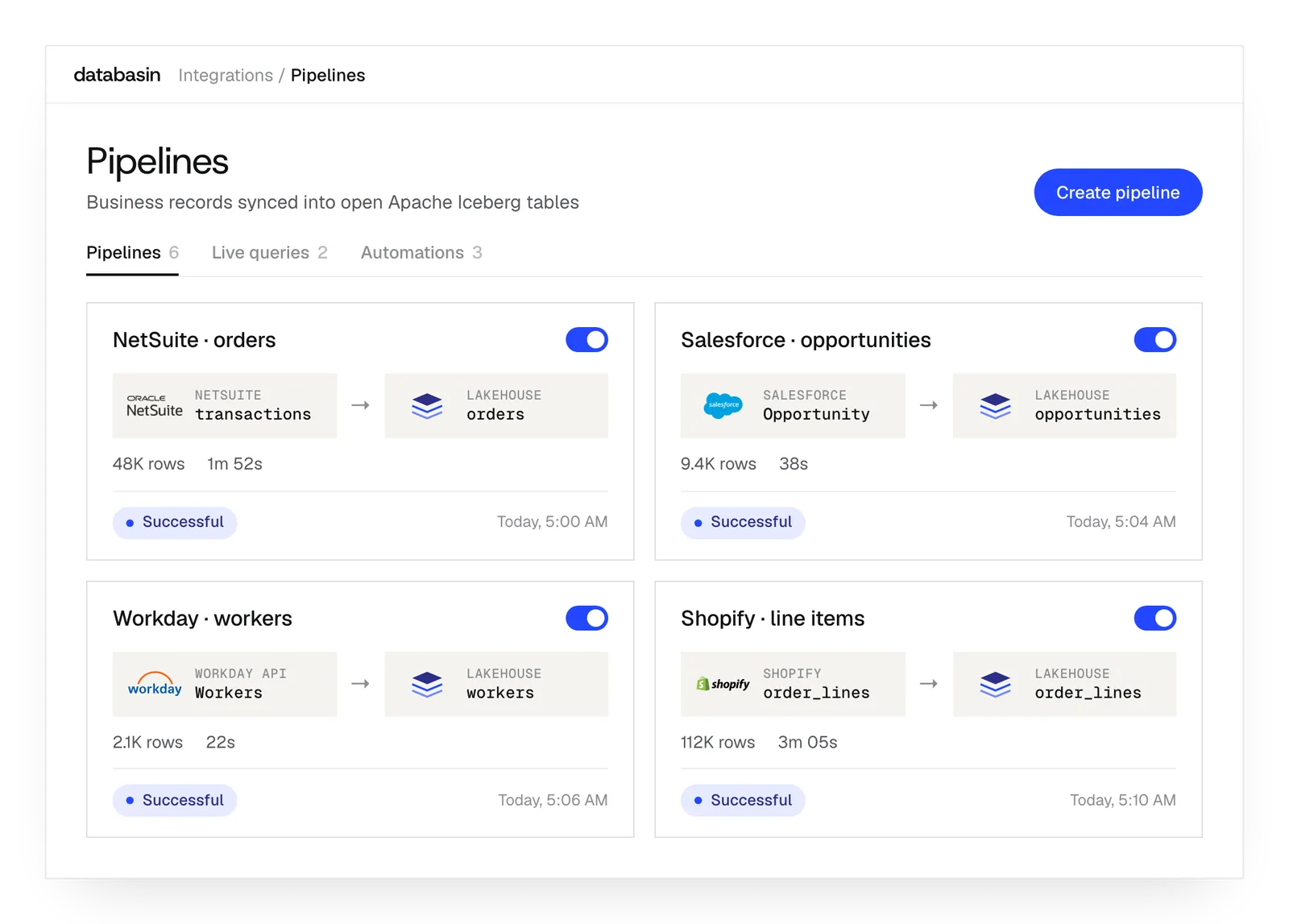
Browse published connections for the databases, applications and files your team uses.
Run history
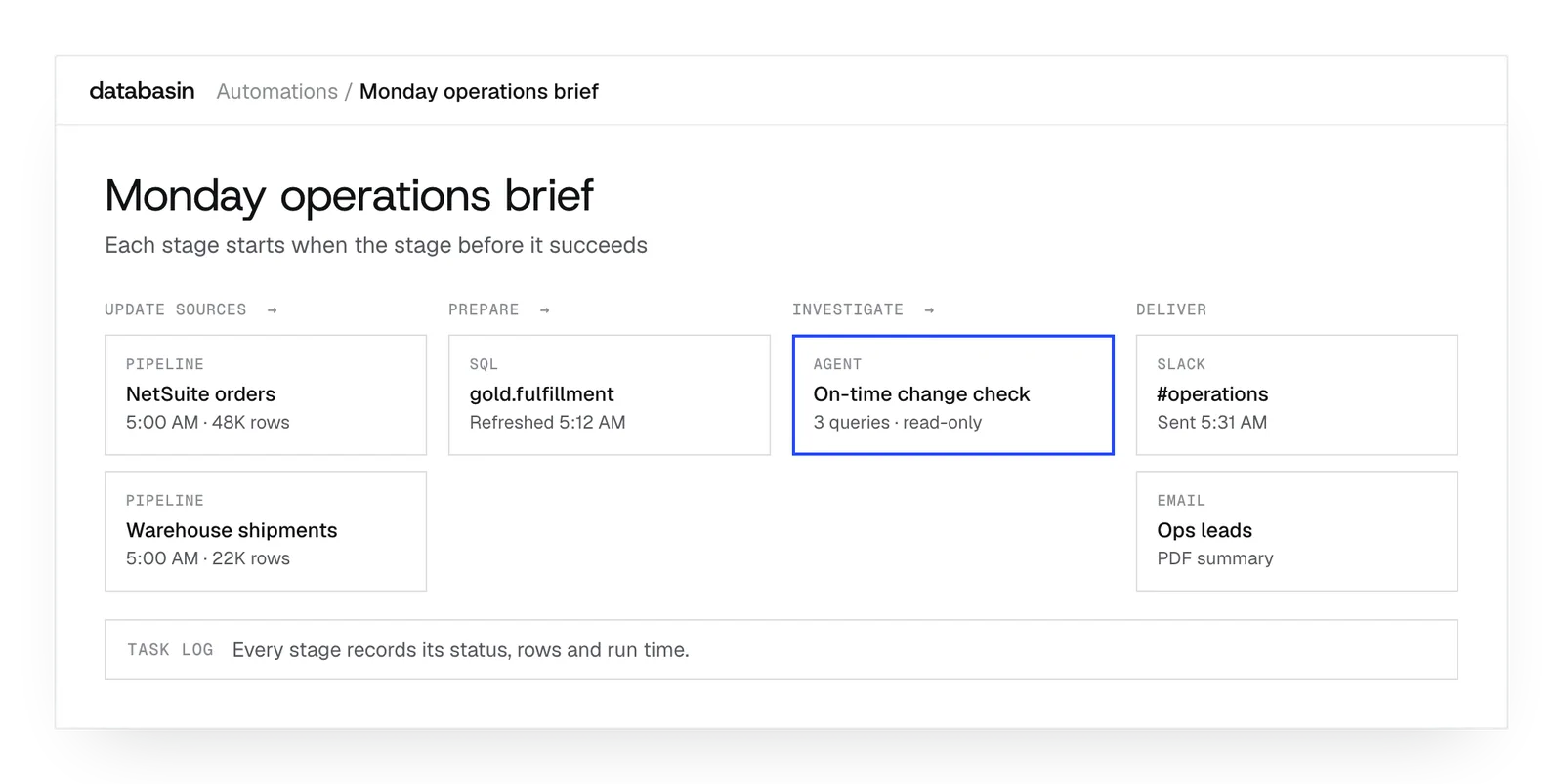
Trace a scheduled workflow through the logs recorded by its tasks.
Existing BI
Use supported Power BI and Tableau connections with the prepared business data.
Improving recurring business decisions
Reviewing operations
Use a Data App for the operations discussion and ask about any measure that needs a different comparison.
Examining financial changes
Examine a departmental change with finance, using the agreed measure and the query that calculated the result.
Checking reporting inputs
Run a quality investigation on refreshed tables and deliver missing-value or duplicate-record findings to the data owner.
What happens next
We would like to hear where your team wants to make progress with data and AI. We can discuss a project you have in mind or explore where Databasin could help with the work.
What happens next
Book a demo
Book a conversation about your organization and the work you want to improve. Questions about where to start are welcome.
Explore the opportunity
We show a working example that answers your business questions, then discuss what it would take to deliver it for your team.
Get the first result
After agreeing the first use case, we implement it with your team. We train the people using it and measure how it performs.
FAQ
How should we compare business analytics platforms?
Start with a question the business needs answered. Examine how a user reaches the result, checks its calculation and shares it. Then look at who prepares the data underneath. The connections, definitions and maintenance matter because they determine whether the same tools remain useful as the business changes.
Is text-to-SQL a substitute for writing SQL ourselves?
You can ask in plain language or write SQL directly. Databasin shows the query generated from a business question, so an analyst can examine it with the person who asked. Either route needs appropriate tables and agreed measures. The difference is how the person expresses the question.
Can this help a team without a dedicated data engineer?
Yes. We can supply the engineering work behind the application or workflow, from connections and business views through operation. Business owners explain the measures and how people will use the output. Together, that gives the organization a way to use the capability without a dedicated data engineer on staff.
Is Databasin suitable for a small organization?
Mid-market organizations are our focus, especially those that want hands-on help improving work through data and AI. Smaller organizations can discuss their needs with us too. We consider the process, systems, users and ongoing support involved before deciding whether an engagement is a useful fit for the work.
Do we have to replace our existing reports?
No. Reports that serve a useful purpose can stay. We look at what people read, what they prepare by hand and what questions follow the report. Then we can agree which work to retain and where a rebuilt report, Data Apps or chat would be useful.
Does connecting a system make its data ready for business questions?
It makes the source records accessible. To answer a business question, those records may still need joins, measure definitions and access rules. Some connectors supply modeled data already. Our team prepares the remaining views around the questions the implementation needs to answer and the people who will ask them.
Can we use an internally approved AI model?
Yes. We configure an appropriate connection to the internally approved model. Your technical and security owners can examine the provider path with us during design, including the requests and data it receives. The connection then serves the application's analysis within the access configured for the project.
How do you decide what to build first?
We choose the first build from the business problem. Discussion with its owners establishes the current process, its cost and the expected improvement. Those findings define what to implement and how to judge the result. The scope can develop through that conversation; it need not be settled beforehand.