Epic data supporting research and operations at WashU
Databasin runs in production at WashU Medicine, supporting clinical research and operations. Co-created at its Institute for Informatics, Data Science & Biostatistics in 2021, the platform entered production in 2022 to manage Epic data at the scale of an academic medical center.

Customer
WashU Medicine
Washington University School of Medicine
Sector
Academic medicine
Clinical research and operations
Timeline
2021–2022
Co-created, then put into production
Result
Production Epic infrastructure
In use at WashU today
What did WashU need from its data?
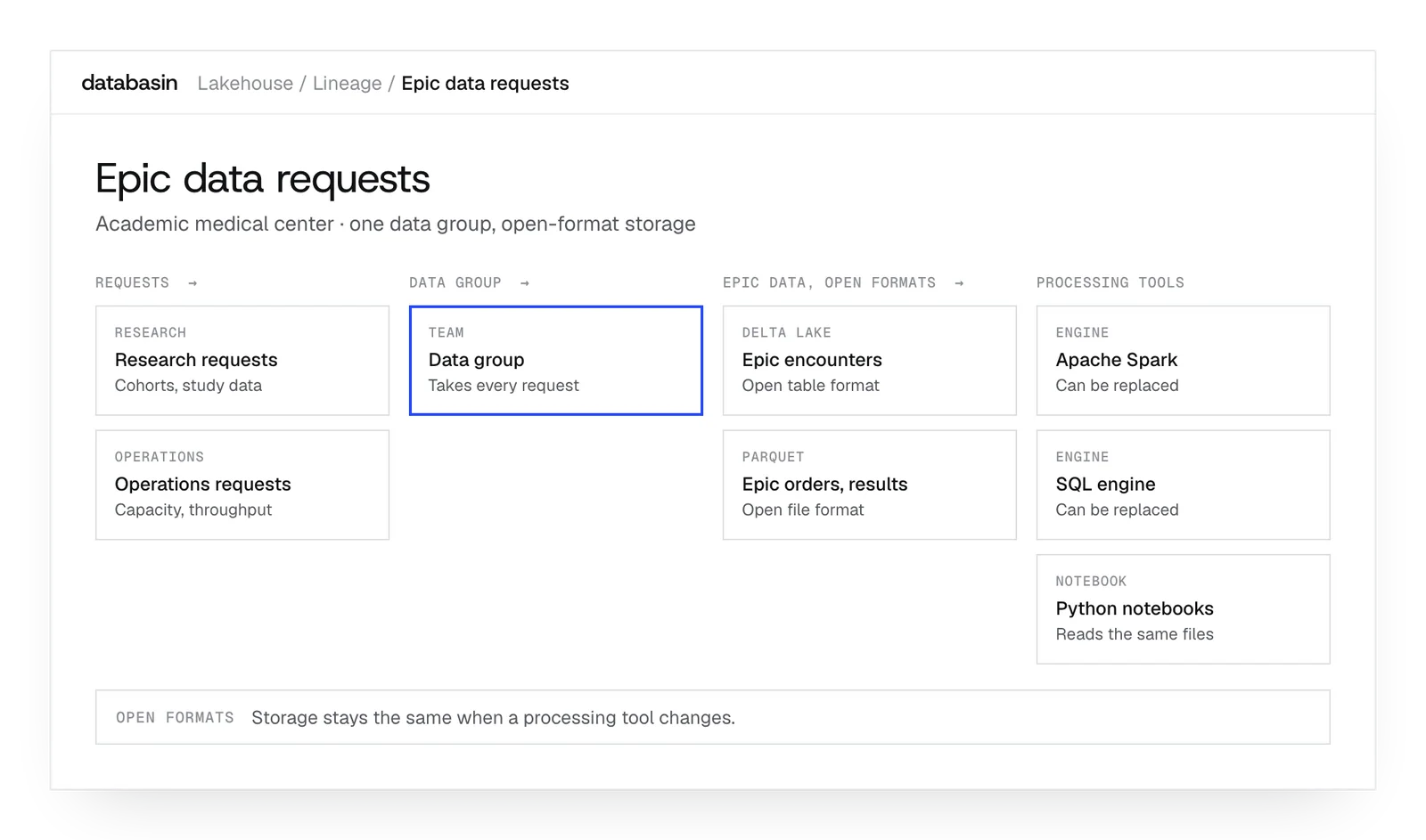
WashU's data group received requests for Epic data every day. Answering them required access to the electronic health record's underlying information and people who knew how to work with it. Both researchers and operational teams needed that data. Managing it had to account for the demands of the wider academic medical center.
Supporting those requests was an ongoing job, so the infrastructure had to accommodate changes in processing tools. Databasin was co-created at the Institute for Informatics, Data Science & Biostatistics with that flexibility in its design. Open formats kept storage independent of the processing engine, allowing the institution's data to remain in those formats as tools changed.
How did the work develop?
2021
Co-create at I2DB
At WashU's Institute for Informatics, Data Science & Biostatistics, work on Databasin began with the demands of managing Epic data in an academic medical center.
During development
Design for open formats
The team chose open formats for storage. Separating storage from the processing engine meant the architecture could accommodate different tools for working with the data.
2022
Put Epic into production
In 2022, Databasin entered production at WashU Medicine. Epic data management was running within the institution that had helped create the platform the previous year.
Today
Support research and operations
Databasin remains in production at WashU Medicine today. The institution uses the platform to support clinical research and operations, continuing the work begun there.
What supports daily data requests?
Foundation
Production support for Epic data
The data group has production infrastructure for the Epic data its requesters need.
Research
Data for clinical research
Clinical research is supported by a platform built within the academic medical center.
Operations
Support for operational questions
The same platform supports operations, another area served by the data group.
Flexibility
Data independent of processing tools
Processing tools can change while the institution's data remains in open formats.
Putting data improvements into daily use
Putting infrastructure into production gives people something to build on. Our engagements today also address how that work will change their daily process. We define the improvement with business owners, then design the process and the technology together.
Implementation on Databasin includes communication, rollout, training and success measurement. After rollout, teams can ask us to support the infrastructure, operate the solution or continue improving the process and its data products. We agree that role around the team's needs, so responsibility for the work continues after the build.
Discuss the work you want to improve
We can talk through the questions, workflows or infrastructure holding your team back. A demo is a chance to explore what Databasin could help you change, including the technology and the people who will use it.